The sidesaddle underwent even more changes during the Renaissance and early Modern eras.
Gradually the planchette was replaced by a stirrup, and the seat became very flat and level. An
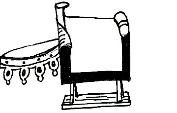
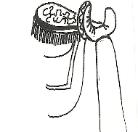
example of a Renaissance-style saddle is the saddle of Queen Elizabeth I of England. The saddles
of Marie Henrietta, wife of Charles I, and Queen Anne of Denmark show the later style.
Gradually the planchette was replaced by a stirrup, and the seat became very flat and level. An
example of a Renaissance-style saddle is the saddle of Queen Elizabeth I of England. The saddles
of Marie Henrietta, wife of Charles I, and Queen Anne of Denmark show the later style.
Queen Elizabeth I's saddle (right)
shows the older footrest, while
Queen Anne of Denmark's saddle
(left) has two horns and is more
modern in appearance
shows the older footrest, while
Queen Anne of Denmark's saddle
(left) has two horns and is more
modern in appearance
At some point, a woman discovered that if she put her right knee around the central horn on the
front of these saddles, she could grip with her leg and have a better seat. Eventually this central
horn was moved to the left side of the pommel, while another horn appeared on the right side.
Traditionally, Catherine de Medici is credited with this improvement, although no hard evidence for
this claim has been found.
From extant drawings and portraits, these early saddles were often covered with velvet and highly
decorated.
By the late 18th century, a more modern-looking sidesaddle had emerged. Made of leather, it
featured two horns on the pommel and a single stirrup. The horns on these “cow horn�
sidesaddles can be very tall and sometimes have a distinctive "U" shape. These may have helped
the rider from bouncing out of her seat if the horse shied.
front of these saddles, she could grip with her leg and have a better seat. Eventually this central
horn was moved to the left side of the pommel, while another horn appeared on the right side.
Traditionally, Catherine de Medici is credited with this improvement, although no hard evidence for
this claim has been found.
From extant drawings and portraits, these early saddles were often covered with velvet and highly
decorated.
By the late 18th century, a more modern-looking sidesaddle had emerged. Made of leather, it
featured two horns on the pommel and a single stirrup. The horns on these “cow horn�
sidesaddles can be very tall and sometimes have a distinctive "U" shape. These may have helped
the rider from bouncing out of her seat if the horse shied.
NOT VERY LADYLIKE?
During the previous eras, sidesaddles
had generally been the property of
wealthy or noble ladies. Yet even some
royal women, including Catherine the
Great of Russia and Marie Antionette
of France, had dressed in men’s
breeches and ridden cross-saddle.
The changes in English and American
culture during the 19th century,
however, made aside riding de rigeur
for respectable women.
During the previous eras, sidesaddles
had generally been the property of
wealthy or noble ladies. Yet even some
royal women, including Catherine the
Great of Russia and Marie Antionette
of France, had dressed in men’s
breeches and ridden cross-saddle.
The changes in English and American
culture during the 19th century,
however, made aside riding de rigeur
for respectable women.
THE VICTORIAN ERA
During the Victorian Era (1837-1901) the sidesaddle reached the height of its popularity.
Victorian ladies rode aside rather than cross-saddle for various reasons: it was culturally
acceptable, it was beautiful, it recalled the days of knights and ladies, it was modest and, it
was, according to some, better suited to feminine anatomy. Above all, Victorian middle-class
women wanted to be seen as respectable “ladies.� Riding like a man created a stir,
and only a few women wanted to buck the system. (In general, the women who rode like
men tended to be either VERY rich or very poor. The very rich could afford not to care what
was said about them, and the very poor had no social position to lose.)
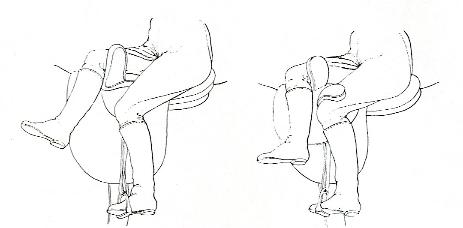
Improvements made the sidesaddle safer to ride. The 1830s brought the invention of the
third horn, called the leaping horn, which made the saddle more secure. When the rider was
seated in the saddle, her left knee came up under the curve of this leaping horn. (See Below)
If the horse shied or jumped, she could raise her knee, locking herself into place. Later in the
century, the diagonal “balance girth� helped to prevent the cantle of the saddle from
twisting on the horse’s back.
Although the leaping horn made riding aside safer, many "two-horn" sidesaddles without the
leaping horn were made. These were usually very inexpensive and were marketed at middle
and lower-middle class women.
During the Victorian Era (1837-1901) the sidesaddle reached the height of its popularity.
Victorian ladies rode aside rather than cross-saddle for various reasons: it was culturally
acceptable, it was beautiful, it recalled the days of knights and ladies, it was modest and, it
was, according to some, better suited to feminine anatomy. Above all, Victorian middle-class
women wanted to be seen as respectable “ladies.� Riding like a man created a stir,
and only a few women wanted to buck the system. (In general, the women who rode like
men tended to be either VERY rich or very poor. The very rich could afford not to care what
was said about them, and the very poor had no social position to lose.)
Improvements made the sidesaddle safer to ride. The 1830s brought the invention of the
third horn, called the leaping horn, which made the saddle more secure. When the rider was
seated in the saddle, her left knee came up under the curve of this leaping horn. (See Below)
If the horse shied or jumped, she could raise her knee, locking herself into place. Later in the
century, the diagonal “balance girth� helped to prevent the cantle of the saddle from
twisting on the horse’s back.
Although the leaping horn made riding aside safer, many "two-horn" sidesaddles without the
leaping horn were made. These were usually very inexpensive and were marketed at middle
and lower-middle class women.
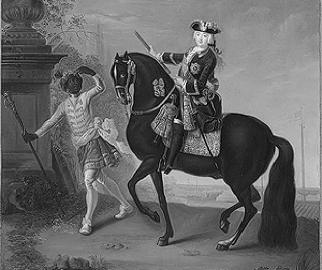
| Left: Catherine the Great of Russia rides astride in this 18th century portrait. |
Right: The Rider's
seat in a two-horn
and three-horn
sidesaddle. From
Tylden's Horses and
Saddlery.
seat in a two-horn
and three-horn
sidesaddle. From
Tylden's Horses and
Saddlery.