LITTLE BO PEEP or RAM-BO?
Sheep have the reputation of being cute and cuddly. Few baby animals are more innocent-
looking than baby lambs, and a flock of ewes grazing is a peaceful sight.
There is one member of the sheep “family,� though, who isn’t always so peaceful
or innocent: the ram.
It’s hard to believe that our adorable, big-eyed ram-lamb Eustace could ever be
dangerous. Rams are programmed to protect their ewes and lambs from potential predators
and other rams, and they’re not very discriminating about who they consider a threat.
People have been hurt and even killed by rams. Some rams like nothing better than ramming
into the thick boards of their pens and snapping them like toothpicks.
While there are definately some rams who are friendly and never turn dangerous, most
breeders advise that ram-lambs never be made into pets. A pet ram loses his natural fear of
humans, and is more likely to try to attack a human.
Eustace (left) came to us already tamed and liking humans. He loves to be petted and likes to
get treats. Next year, Eustace will probably have to live in a special, extra-strong pen of his
own when he’s not with his ewes.
"If a young ram ever comes up and gently bumps your legs, go right then, hook up to your
trailer and take him to the auction. He's going to turn dangerous." - Sheep Raiser Near
Gladewater, Tx.
Sheep have the reputation of being cute and cuddly. Few baby animals are more innocent-
looking than baby lambs, and a flock of ewes grazing is a peaceful sight.
There is one member of the sheep “family,� though, who isn’t always so peaceful
or innocent: the ram.
It’s hard to believe that our adorable, big-eyed ram-lamb Eustace could ever be
dangerous. Rams are programmed to protect their ewes and lambs from potential predators
and other rams, and they’re not very discriminating about who they consider a threat.
People have been hurt and even killed by rams. Some rams like nothing better than ramming
into the thick boards of their pens and snapping them like toothpicks.
While there are definately some rams who are friendly and never turn dangerous, most
breeders advise that ram-lambs never be made into pets. A pet ram loses his natural fear of
humans, and is more likely to try to attack a human.
Eustace (left) came to us already tamed and liking humans. He loves to be petted and likes to
get treats. Next year, Eustace will probably have to live in a special, extra-strong pen of his
own when he’s not with his ewes.
"If a young ram ever comes up and gently bumps your legs, go right then, hook up to your
trailer and take him to the auction. He's going to turn dangerous." - Sheep Raiser Near
Gladewater, Tx.
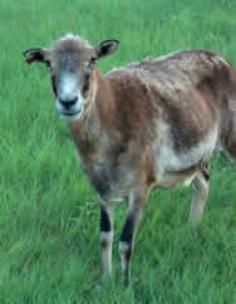
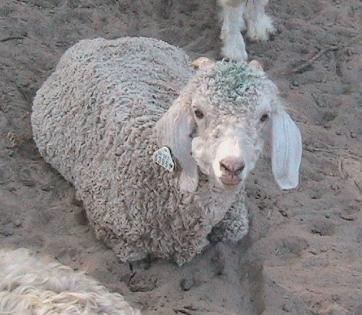
The Barbado sheep on the left is an example of a hair sheep. Many hair sheep are used for meat production. The Angora goat on the right is one of
our little girls. Angoras have long, silky locks called mohair.
Sometimes it may not be so easy to distinguish sheep from goats at a distance. Both are similar in some ways: both are ruminants, both have a dental
pad rather than upper front teeth and both make a bleating sound.
Here are some differences:
Sheep are called ewes (f), rams (m), wethers (neutered male) and lambs.
Sheep and goats have different numbers of chromosomes.
Sheep are natural lawnmowers while goats are natural weed-eaters. Sheep mostly graze (eat grass) while standing on four legs. Goats like to browse
(eat leaves and twigs), and can easily stand on their hind legs. Of course, they can graze, too.
Sheep and goats have slightly different nutritional needs. Sheep are especially sensitive to copper.
Most sheep are extremely flock-oriented. Some breeds stick closely together, even grazing in the same direction. (Our Cheviots are an exception to
this.) They also panic easily, and can trap or hurt themselves when frightened. Goats, while definitely herd animals, wander apart to browse. Goats in
general are more inquisitive and more independent than sheep.
Sheep’s horns tend to curl more than goats’ horns, although not all goats and sheep have horns.
Goats’ tails turn up usually, while sheep’s tails (unless they are docked) hang down.
DID YOU KNOW? Certain breeds of sheep are considered dairy sheep. These ewes are milked, just as cows and dairy goats are milked.
Sheep milk is often made into gourmet cheeses.
our little girls. Angoras have long, silky locks called mohair.
Sometimes it may not be so easy to distinguish sheep from goats at a distance. Both are similar in some ways: both are ruminants, both have a dental
pad rather than upper front teeth and both make a bleating sound.
Here are some differences:
Sheep are called ewes (f), rams (m), wethers (neutered male) and lambs.
Sheep and goats have different numbers of chromosomes.
Sheep are natural lawnmowers while goats are natural weed-eaters. Sheep mostly graze (eat grass) while standing on four legs. Goats like to browse
(eat leaves and twigs), and can easily stand on their hind legs. Of course, they can graze, too.
Sheep and goats have slightly different nutritional needs. Sheep are especially sensitive to copper.
Most sheep are extremely flock-oriented. Some breeds stick closely together, even grazing in the same direction. (Our Cheviots are an exception to
this.) They also panic easily, and can trap or hurt themselves when frightened. Goats, while definitely herd animals, wander apart to browse. Goats in
general are more inquisitive and more independent than sheep.
Sheep’s horns tend to curl more than goats’ horns, although not all goats and sheep have horns.
Goats’ tails turn up usually, while sheep’s tails (unless they are docked) hang down.
DID YOU KNOW? Certain breeds of sheep are considered dairy sheep. These ewes are milked, just as cows and dairy goats are milked.
Sheep milk is often made into gourmet cheeses.
Dividing the Sheep from the Goats
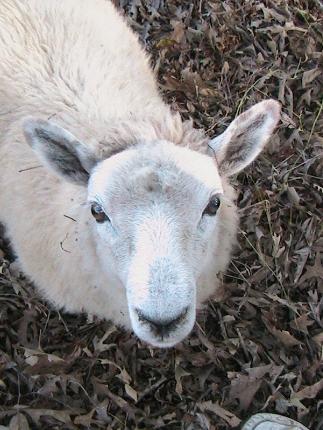
It’s easy to tell the difference between a sheep and a goat, right? Which is which below?
It’s easy to tell the difference between a sheep and a goat, right? Which is which below?
| "Who, me a baaad boy?" |