| There are different kinds of goats. Some goats are dairy goats. These are bred to produce milk. Nubians, Oberhaslis, LaManchas, Alpines and Nigerian Dwarfs are a few of the dairy goat breeds. |
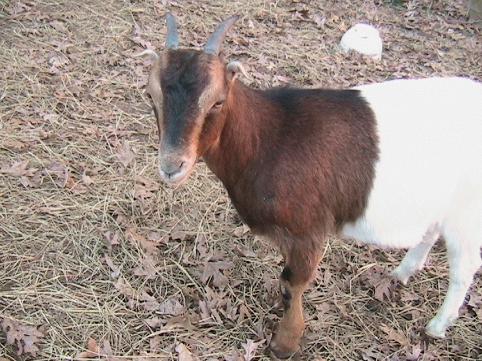
My friend Sprite is a LaMancha dairy goat.
LaManchas are easily recognized because they
have very small or no ears!
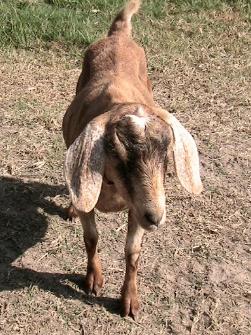
In contrast, a Nubian milk goat (like the
Nubian-mix Dewberry below) has long, droopy
ears.
LaManchas are easily recognized because they
have very small or no ears!
In contrast, a Nubian milk goat (like the
Nubian-mix Dewberry below) has long, droopy
ears.
GOAT'S MILK
When the Bible says "milk," it usually is referring to goat's milk
rather than cow milk. In many parts of the world, goat's milk is still
very common.
Goat's milk is a little different than cow's milk and some people find
it easier to digest. People who are allergic to cow's milk can
sometimes drink goat's milk.
Goat's milk is often made into yogurt and cheese.
Some breeds of goats make a milk that tastes more "goaty" than
others. Feed, living conditions and even sunlight can affect how a
goat's milk tastes.
When the Bible says "milk," it usually is referring to goat's milk
rather than cow milk. In many parts of the world, goat's milk is still
very common.
Goat's milk is a little different than cow's milk and some people find
it easier to digest. People who are allergic to cow's milk can
sometimes drink goat's milk.
Goat's milk is often made into yogurt and cheese.
Some breeds of goats make a milk that tastes more "goaty" than
others. Feed, living conditions and even sunlight can affect how a
goat's milk tastes.
| FIBER FROM GOATS All goats have hair of one type or another. Regular goats' hair can be made into very rough, hard-wearing fabric. In the Bible, it was used to make tents. Some goats have very soft hair, though. This hair is used to make expensive garments and upholstery. CASHMERE is a very soft, downy, luxury fiber from the undercoat of some goats. Cashmere is often combed out of the goat's coat. MOHAIR is the hair of the ANGORA goat. Mohair is long, shiny and silky. (Angora fiber is produced by Angora rabbits.) Angora goats can be white or colored. |
| MY Cashmere isn't WASHABLE! Recently some stores have advertised expensive washable cashmere undercoats, but they would highly object to being washed. (Many goats HATE being wet.) |
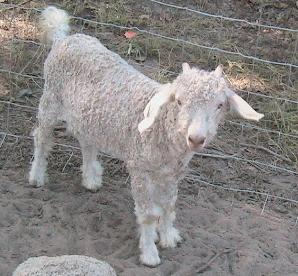
ANGORAS are goats in sheep's
clothing. Their long, silky mohair
locks are made into luxury
garments, doll wigs, and even
upholstery and rugs. Angoras are
usually sheared twice a year and
come in several colors.
clothing. Their long, silky mohair
locks are made into luxury
garments, doll wigs, and even
upholstery and rugs. Angoras are
usually sheared twice a year and
come in several colors.