| SIDESADDLES AND ASIDE RIDING |
What is a sidesaddle? The dictionary will tell you that a sidesaddle is a saddle
made so that a person can ride with both legs on one side of a horse. This
seems like a strange way to ride, doesn't it? How did sidesaddle riding (called
aside riding) get started?
No one really knows. During ancient times, Greek and Roman goddesses were
sometimes shown sitting aside on horseback.
You may have seen pictures of the Virgin Mary sitting sideways on a donkey.
This is probably correct. If Mary rode a donkey, she would probably had sat on
a saddlepad. This was just a cloth or blanket. It didn't have the wooden
foundation, called a tree, that saddles have today.
The first true "sidesaddles" with a tree developed in the the Middle Ages.
You've probably seem movies and pictures of knights. Knights depended on
their large, secure saddles to help them stay on their horses during battle.
made so that a person can ride with both legs on one side of a horse. This
seems like a strange way to ride, doesn't it? How did sidesaddle riding (called
aside riding) get started?
No one really knows. During ancient times, Greek and Roman goddesses were
sometimes shown sitting aside on horseback.
You may have seen pictures of the Virgin Mary sitting sideways on a donkey.
This is probably correct. If Mary rode a donkey, she would probably had sat on
a saddlepad. This was just a cloth or blanket. It didn't have the wooden
foundation, called a tree, that saddles have today.
The first true "sidesaddles" with a tree developed in the the Middle Ages.
You've probably seem movies and pictures of knights. Knights depended on
their large, secure saddles to help them stay on their horses during battle.
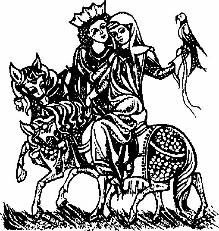
Above: This Medieval Lady is riding
astride (like a man.) She is hunting with a
falcon.
astride (like a man.) She is hunting with a
falcon.
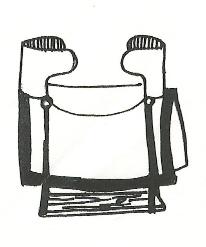
These saddles had a major problem, though.
The woman had to sit facing sideways! Sitting
like that, she couldn't guide the horse very well.
Medieval women didn't ride sidesaddles all the
time, though. It appears that they sometimes
rode astride (like men). For ceremonies,
though, wealthy noblewomen rode sidesaddle
so that their dresses could be seen!
The woman had to sit facing sideways! Sitting
like that, she couldn't guide the horse very well.
Medieval women didn't ride sidesaddles all the
time, though. It appears that they sometimes
rode astride (like men). For ceremonies,
though, wealthy noblewomen rode sidesaddle
so that their dresses could be seen!
| The Queen's sidesaddle from a French illustration (Sir Lancelot Du Lac) |
Gradually, men's saddles lost the high,
curved, front part. A smaller horn took
its place.
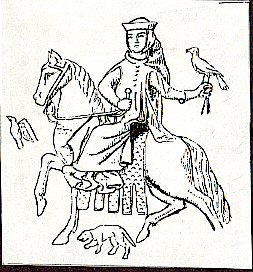
On this type of saddle, a woman could
face forward while sitting sidesaddle.
These saddles often still had a wooden
footrest rather than a stirrup.
Left: Alix of Brabant rides sidesaddle while hunting.
This picture is from a French royal seal of office.
curved, front part. A smaller horn took
its place.
On this type of saddle, a woman could
face forward while sitting sidesaddle.
These saddles often still had a wooden
footrest rather than a stirrup.
Left: Alix of Brabant rides sidesaddle while hunting.
This picture is from a French royal seal of office.
If you don't know much about horses or saddles you might want to look at this page
first. It shows the difference between Western and English saddles, and for what they
are used.
first. It shows the difference between Western and English saddles, and for what they
are used.