1900s
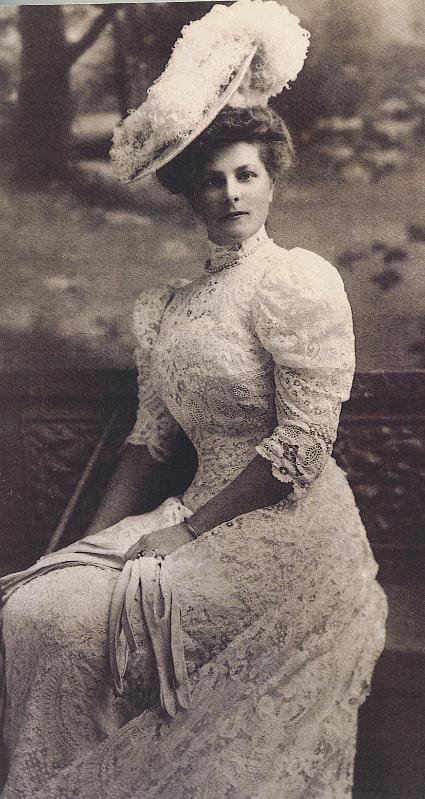
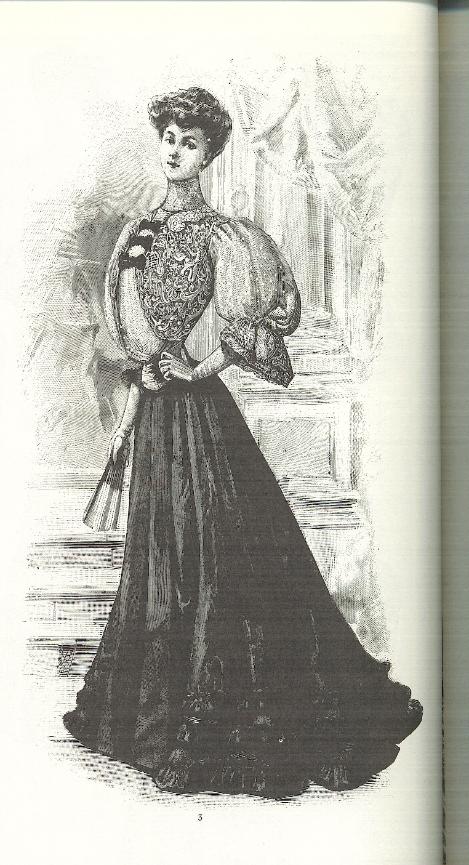
Ladies of the 1900s might wear either lacy dresses made of thin white
material, tailored suits OR a lacy blouse with a plain skirt.
High collars were still popular, but sleeves are a little smaller. Big hats are
still very fashionable. Blouses often were very full in front, while the skirt
protruded a little in the back. This "S" shape was accentuated by the
woman's corset.
Hair was put over pads called "rats" to make a soft, puffy style.
Ladies of the 1900s might wear either lacy dresses made of thin white
material, tailored suits OR a lacy blouse with a plain skirt.
High collars were still popular, but sleeves are a little smaller. Big hats are
still very fashionable. Blouses often were very full in front, while the skirt
protruded a little in the back. This "S" shape was accentuated by the
woman's corset.
Hair was put over pads called "rats" to make a soft, puffy style.
1910s
During the 1910s, fashion styles grew much simpler.
Clothing was easier to sew and not as fitted. High
waistlines returned during the Neo-Empire era,
echoing the styles of a century before.
Dresses of the World War I era was simple and
practical, because it was wasteful to use more fabric
than necessary.
While the hoopskirt of the 1860s had been huge,
the "hobble skirt" of the 1910s was so narrow that it
made walking difficult.
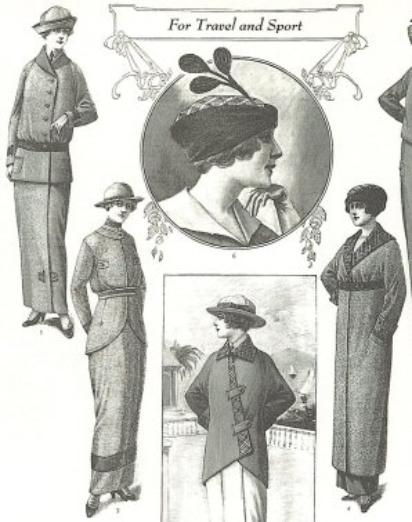
Notice the military-inspired hats on some of the
women in the picture on the right. Khaki and army
green were popular colors during this time.
During the 1910s, fashion styles grew much simpler.
Clothing was easier to sew and not as fitted. High
waistlines returned during the Neo-Empire era,
echoing the styles of a century before.
Dresses of the World War I era was simple and
practical, because it was wasteful to use more fabric
than necessary.
While the hoopskirt of the 1860s had been huge,
the "hobble skirt" of the 1910s was so narrow that it
made walking difficult.
Notice the military-inspired hats on some of the
women in the picture on the right. Khaki and army
green were popular colors during this time.
The 1920s saw an incredible change in fashion for women.
For the first time probably since the ancient world, women's dresses were no longer
meant to accentuate women's bodies. The extreme flapper dresses of the 20s were
sack-like garments, although they were often beautifully embroidered or decorated
with fringe or beads. Some, but not all, women wore shorter skirts during the 20s,
and adventurous girls cut their hair short in a fashionable style called a "bob."
The 20s was a daring era- women began to openly smoke cigarettes and wore
makeup. (Wealthy women had worn heavy makeup during the 1700s, but most
women weren't used to makeup.)
For the first time probably since the ancient world, women's dresses were no longer
meant to accentuate women's bodies. The extreme flapper dresses of the 20s were
sack-like garments, although they were often beautifully embroidered or decorated
with fringe or beads. Some, but not all, women wore shorter skirts during the 20s,
and adventurous girls cut their hair short in a fashionable style called a "bob."
The 20s was a daring era- women began to openly smoke cigarettes and wore
makeup. (Wealthy women had worn heavy makeup during the 1700s, but most
women weren't used to makeup.)
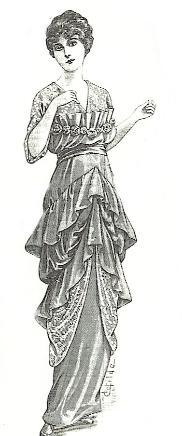
| 1913 Ballgown from La Mode Illustree |
| 1914 Coats from La Mode Illustree |
Above: 1904 Dress and Photo from the Collection of the
Metropolitan Museum of Art
Left: 1905 Dress from La Mode Illustree
Metropolitan Museum of Art
Left: 1905 Dress from La Mode Illustree
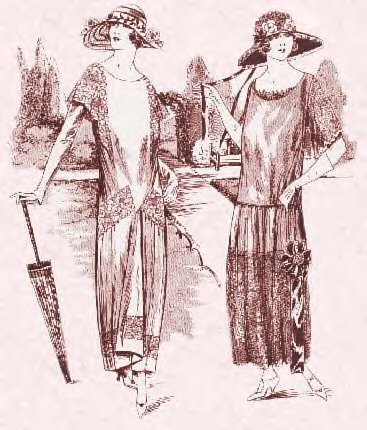
| 1920s Flapper Dresses |