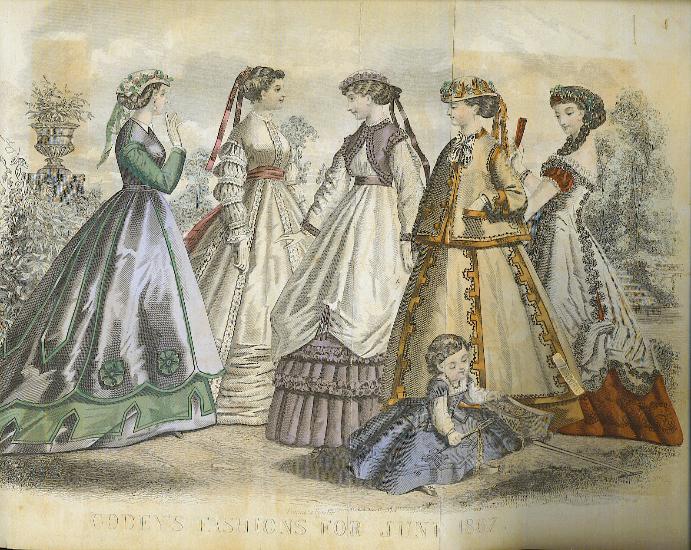
Skirts reached their largest size in the 1860s. Hoopskirts grew larger and larger. At first they were round and bell-shaped. By the end of the 1860s, they
were oval and slightly longer in the back. Hairstyles featured large buns or knots at the back of women's heads.
The little child in this illustration is a boy. During the 19th and early 20th centuries, little boys often wore skirts or kilts. Hairstyles (parted in center for girls
and on the side for boys) and toys (like the wagon in this plate) indicate whether the child is a boy or a girl.
Hoopskirts were very popular. Even women who couldn't afford to buy hoopskirts tried to imitate them. Some women in Texas ran grapevines through
tucks in their petticoats to make their own hoops.
Hoopskirts had one advantage in the South, where the weather was hot. The hoop kept the woman cooler because her skirts were away from her legs.
Hoopskirts were worn in most Western countries, though, not just in the American South.
Hoops were difficult to wear, though. Sometimes they were too large to fit through doorways or into carriages. They would also tip up, showing a
woman's legs.
were oval and slightly longer in the back. Hairstyles featured large buns or knots at the back of women's heads.
The little child in this illustration is a boy. During the 19th and early 20th centuries, little boys often wore skirts or kilts. Hairstyles (parted in center for girls
and on the side for boys) and toys (like the wagon in this plate) indicate whether the child is a boy or a girl.
Hoopskirts were very popular. Even women who couldn't afford to buy hoopskirts tried to imitate them. Some women in Texas ran grapevines through
tucks in their petticoats to make their own hoops.
Hoopskirts had one advantage in the South, where the weather was hot. The hoop kept the woman cooler because her skirts were away from her legs.
Hoopskirts were worn in most Western countries, though, not just in the American South.
Hoops were difficult to wear, though. Sometimes they were too large to fit through doorways or into carriages. They would also tip up, showing a
woman's legs.
1870s BUSTLE
By the end of the 1860s, women were tired of the big hoopskirts.
Overskirts had already become popular. More and more decoration
was now put on the back of the skirt.
Dresses of the 1870s drew some of their inspiration from the 1770s,
as 1876 was the centennial of our country. Overskirts and square
necklines were popular. Sleeves and decorations in the 1870s were
very heavily trimmed. Hair was arranged in large knots on the back
of the head.
The large hoopskirt disappeared, but a rounded bustle in the back
remained. Sometimes this bustle was very large. Even little girls'
dresses had drapery and bows on the back.
By the end of the 1860s, women were tired of the big hoopskirts.
Overskirts had already become popular. More and more decoration
was now put on the back of the skirt.
Dresses of the 1870s drew some of their inspiration from the 1770s,
as 1876 was the centennial of our country. Overskirts and square
necklines were popular. Sleeves and decorations in the 1870s were
very heavily trimmed. Hair was arranged in large knots on the back
of the head.
The large hoopskirt disappeared, but a rounded bustle in the back
remained. Sometimes this bustle was very large. Even little girls'
dresses had drapery and bows on the back.
Garabaldi Blouses
During the Civil War (1861-1865), cloth was often hard to get, especially in the South. Garabaldi blouses became
very popular. Rather than having a dress made of all one fabric, a woman could have a skirt of one fabric and a
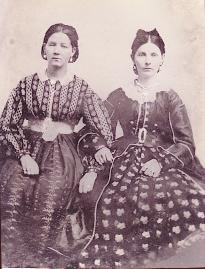
blouse of another. Garabaldi blouses were also relatively easy to make. Here are some of my ancestresses. The
lady on the left is wearing a garabaldi-type blouse. The broad belts with rectangular buckles were very popular in
the 1860s.
During the Civil War (1861-1865), cloth was often hard to get, especially in the South. Garabaldi blouses became
very popular. Rather than having a dress made of all one fabric, a woman could have a skirt of one fabric and a
blouse of another. Garabaldi blouses were also relatively easy to make. Here are some of my ancestresses. The
lady on the left is wearing a garabaldi-type blouse. The broad belts with rectangular buckles were very popular in
the 1860s.
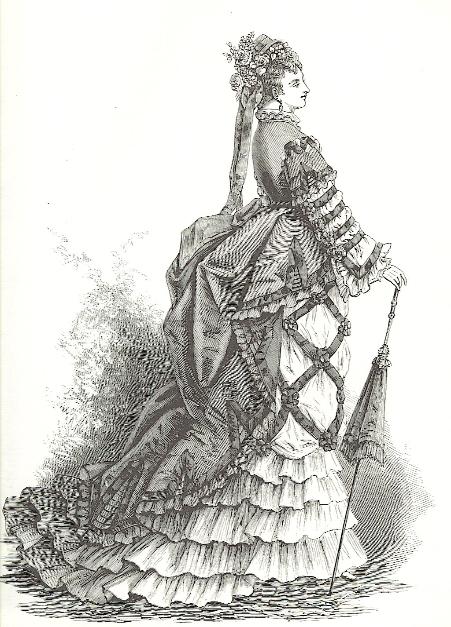
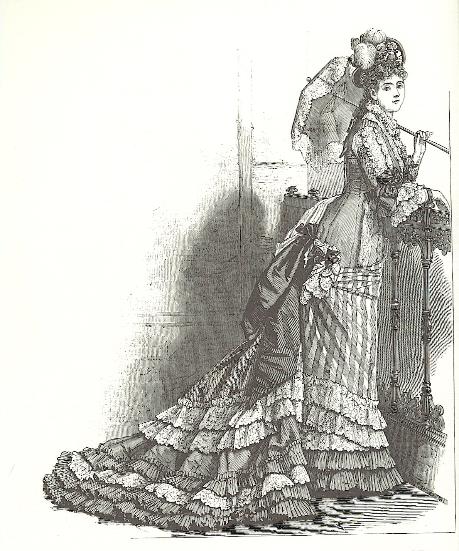
| Left: Dress of 1873 Below: Dress of 1876 Both from Victorian Fashions and Costumes from Harper's Bazar. |
By the end of the 1870s, the bustle had disappeared,
leaving the heavy drapery flowing into a long train.
This lady's elaborate dress has an overskirt that is tied
tightly across the front of her dress. Walking in dresses
like this was very difficult, and only very wealthy
women could afford clothing like this.
leaving the heavy drapery flowing into a long train.
This lady's elaborate dress has an overskirt that is tied
tightly across the front of her dress. Walking in dresses
like this was very difficult, and only very wealthy
women could afford clothing like this.
Fashion Plate from Godey's Lady's Book, June
1867
1867