| ABOUT US |
| Our adventure in goat-keeping started with a problem: a pasture with lots of honeysuckle vines, briars, etc. that our pony wouldn't eat. Our solution: get a goat! We decided to try Nigerian Dwarves, as they were small. We originally intended to buy only get ONE goat. We came home from the breeders with FOUR goats: Mama Sugar and her two adorable babies (Hershey and Loki) and a mature buck named Pan. We enjoyed them so much that we purchased some registered stock. Our Nigerians have been a source of enjoyment for our whole family. We are especially impressed with their (mostly) gentle and affectionate temperament. We can allow our daughter to play in the goat field without any fear of her being harmed. Our goal is to produce loving, healthy Nigerian Dwarf goats for the backyard dairy and as pets. We believe that these little goats have a real place in providing milk for the family, and hope that more 4-H programs will come to recognize their value as project animals. Over time, we will continue to refine our herd to include the most human-friendly and milk-producing animals. If God is willing, we would like to eventually participate in milking trials and CAE testing. Our goats have been great stress-relievers! Good luck with your goats! |
| Stephen is a native of Marshall, Texas and was graduated from East Texas Baptist University. He is a CPA specializing in non-profit and healthcare accounting, and has a practice in Longview, Tx. |
| Shanna grew up on a 400 acre beef farm in North Louisiana. She has a master's degree in Museum Science from Texas Tech. Now she's a full-time Mom and animal care-giver. |
| Sarah is a native of Chelyabinsk, Russia. She's lively, full of energy and is our official "baby goat-tamer!" |
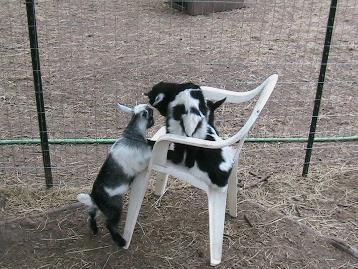
| Three's Company! Nigerian Dwarf kids are simply adorable. With love and care, they grow up to be good pets and/or good milkers. |
| HOW OUR GOATS & OTHER ANIMALS ARE TREATED |
FEED.....Most of our animals are fed twice a day. In addition, pregnant
does have access to a high-protein lick (tub) and usually are allowed to
browse (goats love leaves and vines more than grass) outside of their pen
for an hour or two every day. Then they come in and take a nap.
During the winter months, animals have hay available and all animals have
access to salt licks and/or mineral licks.
does have access to a high-protein lick (tub) and usually are allowed to
browse (goats love leaves and vines more than grass) outside of their pen
for an hour or two every day. Then they come in and take a nap.
During the winter months, animals have hay available and all animals have
access to salt licks and/or mineral licks.
BIRTH.....We try to be present when our does deliver to be sure
everything goes well and to bond with the babies. This usually means
that we're up all hours of the night during kidding season.
In cold weather, or if the babies are tiny, the doe and her kids can
come into our enclosed, heated garage "sun-room" area for a few
days. We hope to have a heated room in their barn built soon.
During the coldest weather, a heat-lamp helps to keep the baby goats
warm in the goat-shelter.
Usually we have at least one bottle-kid or lamb a year. That lucky little
animal usually becomes incredibly spoiled and a household pet.
There's nothing cuter than a tiny baby goat!
everything goes well and to bond with the babies. This usually means
that we're up all hours of the night during kidding season.
In cold weather, or if the babies are tiny, the doe and her kids can
come into our enclosed, heated garage "sun-room" area for a few
days. We hope to have a heated room in their barn built soon.
During the coldest weather, a heat-lamp helps to keep the baby goats
warm in the goat-shelter.
Usually we have at least one bottle-kid or lamb a year. That lucky little
animal usually becomes incredibly spoiled and a household pet.
There's nothing cuter than a tiny baby goat!
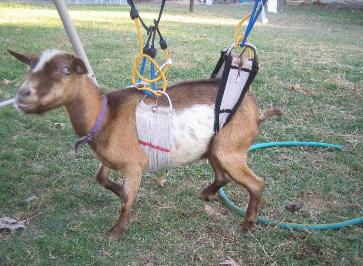
Tiny kids are easy to love, but we also care for older and
sick members of our herd. This is Lilly, a very sweet goat
that we gave "physical therapy" to for a long time.
Below: Here is Lilly in her "hot tub." We hoped the warm
water would help her. (She is supported by a sling.)
sick members of our herd. This is Lilly, a very sweet goat
that we gave "physical therapy" to for a long time.
Below: Here is Lilly in her "hot tub." We hoped the warm
water would help her. (She is supported by a sling.)
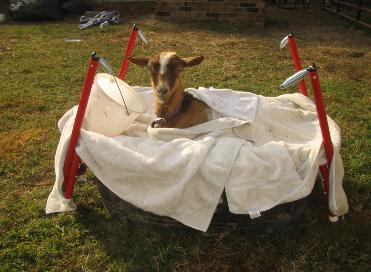
Lilly DID learn to walk again, but the stress on her body
had been too much. We ultimately lost her, but we know
that we did all we could to give her a chance at a good,
goaty life. She died in comfortable surroundings, with her
friends and plenty of feed beside her. No goat could ask
for more.
had been too much. We ultimately lost her, but we know
that we did all we could to give her a chance at a good,
goaty life. She died in comfortable surroundings, with her
friends and plenty of feed beside her. No goat could ask
for more.
At the end.....
We sell most of our kids and lambs, of course, but some of our
breeding animals live out their lives here on the farm. We become
VERY attached to some of our senior herd members.
We believe that the best we can do for our older animals is keep
them as comfortable as we can. As long as they can get up and
follow the herd or flock, then we believe they have a certain quality
of life. Many of our older does, in fact, seem to still be
role-models for the younger does.
Our preference is for our older herd-members to die in their
sleep in the barn, after eating their "supper," surrounded by their
friends and offspring.
But when a herd-member can no longer walk or eat on his own
and there is no hope of recovery, or if he is in great pain, then our
veterinarian puts him to sleep in our presence. We have seen this
done, and it is a dignified and peaceful way for the suffering animal
to end a long and happy life.
We sell most of our kids and lambs, of course, but some of our
breeding animals live out their lives here on the farm. We become
VERY attached to some of our senior herd members.
We believe that the best we can do for our older animals is keep
them as comfortable as we can. As long as they can get up and
follow the herd or flock, then we believe they have a certain quality
of life. Many of our older does, in fact, seem to still be
role-models for the younger does.
Our preference is for our older herd-members to die in their
sleep in the barn, after eating their "supper," surrounded by their
friends and offspring.
But when a herd-member can no longer walk or eat on his own
and there is no hope of recovery, or if he is in great pain, then our
veterinarian puts him to sleep in our presence. We have seen this
done, and it is a dignified and peaceful way for the suffering animal
to end a long and happy life.

| We provide our sick animals with all the care possible. Sick or weak baby animals usually spend the first few nights in a laundry basket with a heating pad in it in our bedroom, being fed every few hours. We hate to lose a baby animal, but sometimes a kid is just born too soon, or her body never functions correctly. Sometimes all we can do is make sure they are warm, full and feel safe while they are with us. Many of our baby animals who die are buried here on the farm. This is our beloved "Blackie Poodler" (angora goat)'s baby daughter, who died at 3 days old. Born too early, this tiny baby could never regulate her body temperature, and she never learned to walk. |
IN SICKNESS.....Goats have lived with humans for a long time, and
they are very peculiar animals in some ways. A goat can get
depressed and die. In fact, mother goats sometimes will get depressed
after losing a kid and simply refuse to eat. We have have 2 mother
goats "search" for their dead kids and pine away.
A sick goat usually enjoys the sympathy of its human herd-master.
Goats like to be made-much-of when they are sick, much like a sick
child. In fact, human presence can ofter seem to encourage a goat to
live rather than give up. (This may be more true of the milking breeds
than the meat breeds.)
they are very peculiar animals in some ways. A goat can get
depressed and die. In fact, mother goats sometimes will get depressed
after losing a kid and simply refuse to eat. We have have 2 mother
goats "search" for their dead kids and pine away.
A sick goat usually enjoys the sympathy of its human herd-master.
Goats like to be made-much-of when they are sick, much like a sick
child. In fact, human presence can ofter seem to encourage a goat to
live rather than give up. (This may be more true of the milking breeds
than the meat breeds.)
Over the years, we've had some wonderful successes. We had a
paralyzed little buck who (thanks to the care of our vet) learned to
walk again. He's now a big, sturdy boy. We also had a little doeling
who could not use her front leg due to her presentation at birth.
Now, as a yearling, she can walk and run perfectly. Then we had
Shadow, the tiny lamb who only weighed 1.8 lbs. at 3 days old...the
smallest of any of our lambs or kids. Shadow not only lived, but
THRIVED and now has a home with a family who loves her.
paralyzed little buck who (thanks to the care of our vet) learned to
walk again. He's now a big, sturdy boy. We also had a little doeling
who could not use her front leg due to her presentation at birth.
Now, as a yearling, she can walk and run perfectly. Then we had
Shadow, the tiny lamb who only weighed 1.8 lbs. at 3 days old...the
smallest of any of our lambs or kids. Shadow not only lived, but
THRIVED and now has a home with a family who loves her.
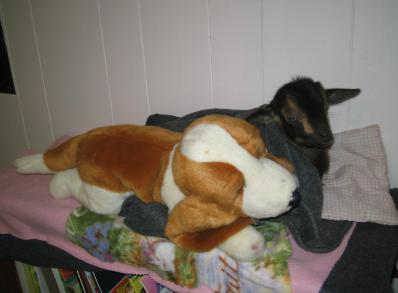
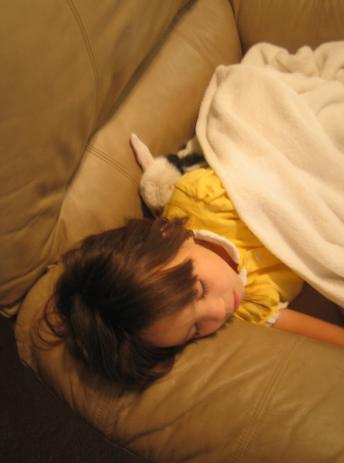
| Here's baby Ishtar snuggled up with Sarah. Ishtar was never sure what species she belonged to. She grew up to be a strong, healthy young doe. |