| A BRIEF HISTORY OF FASHION 1800-1920s |
To understand the fashions of the
1800s, it helps to know how people
dressed in the late 18th century.
REMEMBER: the 18th Century was
the 1700s. The 19th Century was the
1800s.
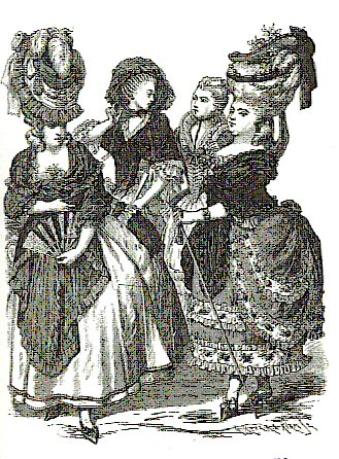
In the late 1700s, wealthy women
wore very elaborate costumes and
hairstyles, like the shown here.
The picture on the left is of French
noblewomen. Some of them are
wearing a romanticized "shepherdess"
style of dress.
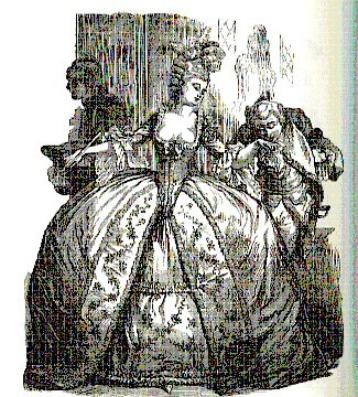
Court dresses, like the one on the right,
were often very elaborate. This dress is
wide on the sides, but the front and
back are flat. Dresses like this were
shaped by two basket-like
undergarments worn over a woman's
hips.
1800s, it helps to know how people
dressed in the late 18th century.
REMEMBER: the 18th Century was
the 1700s. The 19th Century was the
1800s.
In the late 1700s, wealthy women
wore very elaborate costumes and
hairstyles, like the shown here.
The picture on the left is of French
noblewomen. Some of them are
wearing a romanticized "shepherdess"
style of dress.
Court dresses, like the one on the right,
were often very elaborate. This dress is
wide on the sides, but the front and
back are flat. Dresses like this were
shaped by two basket-like
undergarments worn over a woman's
hips.

Today there's lots of interest in the 1800s. Several companies make dolls and books that tell
about life in the past.
When I was a girl, I thought that everyone wore hoopskirts in the 19th century. Then, in the
6th grade, I did a project making historical doll clothing. At my local library I found the book
20,000 Years of Fashion. I was surprised at how clothing has changed over time. From then
on, I loved to study historic costume. I went on to be a museum curator with a special interest
in 19th century womens and children's costume. Today I'm a mom, but I can still share my
interest in costume with you.
about life in the past.
When I was a girl, I thought that everyone wore hoopskirts in the 19th century. Then, in the
6th grade, I did a project making historical doll clothing. At my local library I found the book
20,000 Years of Fashion. I was surprised at how clothing has changed over time. From then
on, I loved to study historic costume. I went on to be a museum curator with a special interest
in 19th century womens and children's costume. Today I'm a mom, but I can still share my
interest in costume with you.
It's clear that very few people could afford to wear clothing like this.
The French people, many of whom lived in poverty, eventually rose up against
the nobility and royality. The new leaders executed King Louis XVI and Queen
Marie Antionette and many other nobles and even common people.
No one wanted to look wealthy anymore. In the 1800s, women began to wear
dresses that reminded them of the clothes on Greek and Roman statues.
The French people, many of whom lived in poverty, eventually rose up against
the nobility and royality. The new leaders executed King Louis XVI and Queen
Marie Antionette and many other nobles and even common people.
No one wanted to look wealthy anymore. In the 1800s, women began to wear
dresses that reminded them of the clothes on Greek and Roman statues.
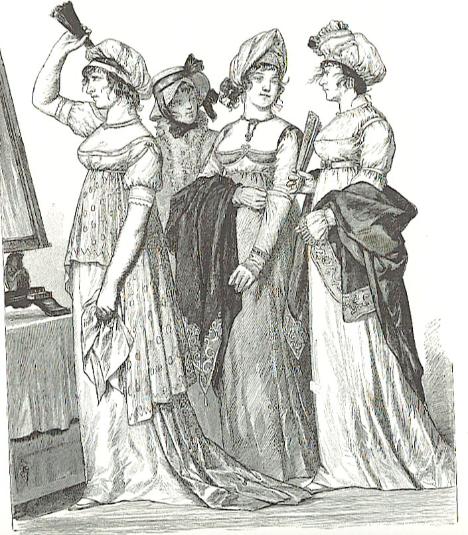
The dresses of the early 1800s were made of thin fabrics and had very high
waists. They were often white.
These dresses weren't suited to every climate, and sometimes women got very
cold. These dresses also didn't look good on every body type.
These dresses are from Braun and Schneider's Historic Costume In Pictures.
waists. They were often white.
These dresses weren't suited to every climate, and sometimes women got very
cold. These dresses also didn't look good on every body type.
These dresses are from Braun and Schneider's Historic Costume In Pictures.
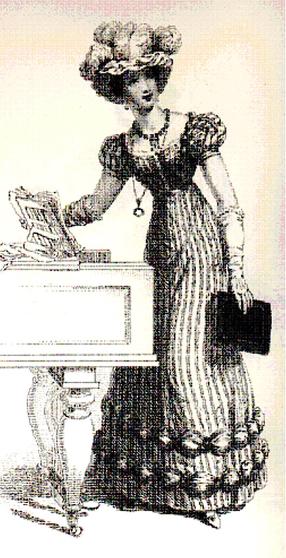
| By the 1810s, people began to get tired of the very simple Neo-classical look. They began to add different trims to the dresses. Sometimes they looked at clothing in the past for inspiration. Ruffs around the neck and sleeve decorations from the Tudor, Elizabethan, or Italian Renaissance periods were popular. Women also added decoration to the hem of the skirt, to make the skirt stand out more. The coat on the left is from 1819. Notice how high the waistline is. The dress on the right is from the 1820s. You can see that the waistline has dropped a little. The puffing decoration used on the skirt was very popular. Both of these dresses are from Ackermann's Costume Plates. |